
George Fragopoulos: Essay on Finitude
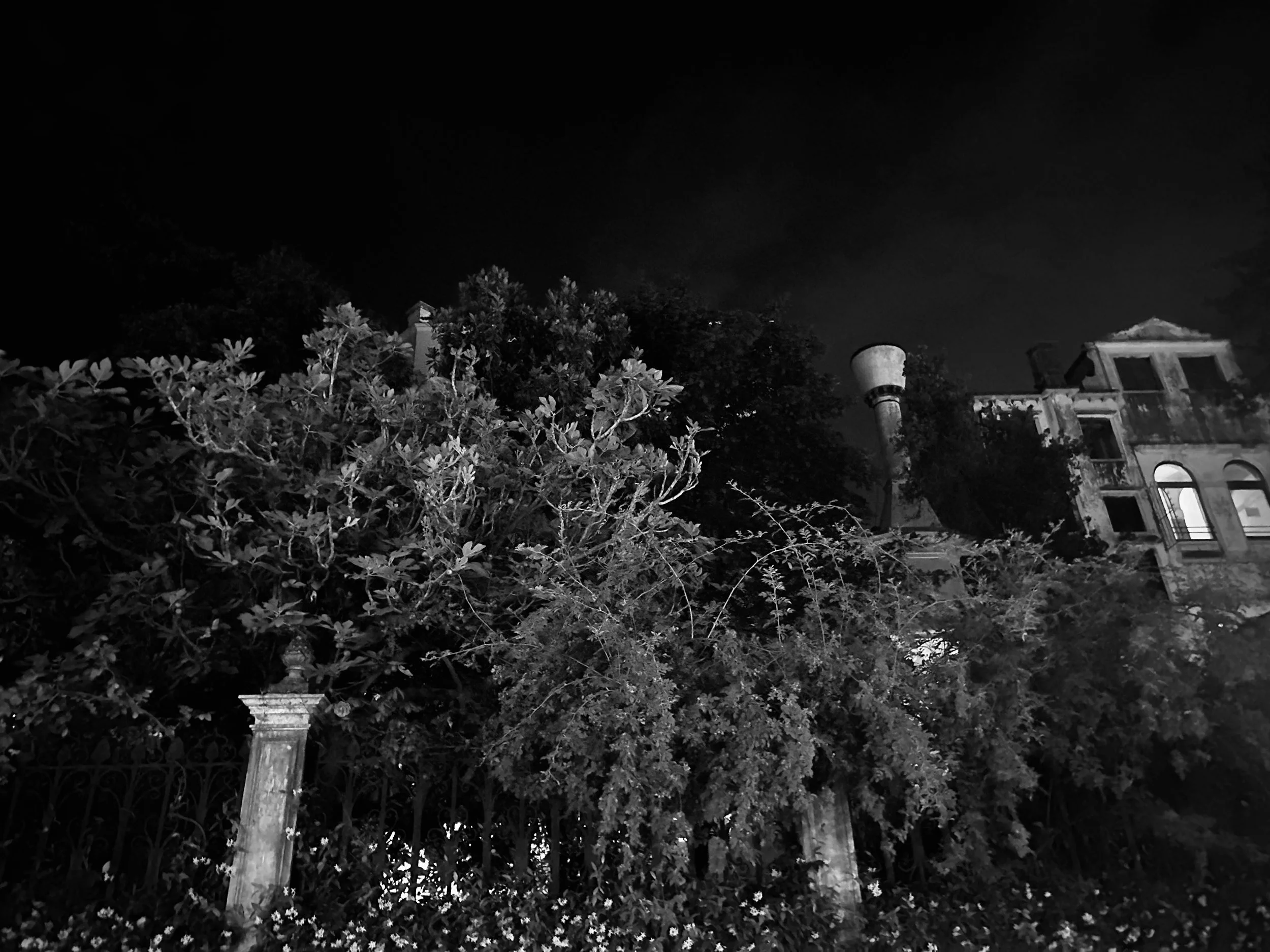
Photo: J Valente
Essay on Finitude After Reading Augustine’s Confessions
I was thinking of all the poems I’d never write, of all the lines and stanzas that would forever remain entombed within me for eternity after my death.
I was thinking, as I was reading Augustine’s Confessions, of his preference for the “imperishable” over the “perishable,” words specific to my translation.
I was thinking how this is such an easy choice to make.
I was thinking: Yes, the fiction of ongoing existence is beautiful, much like how many of the poems I will never write would also have been, in their own way, beautiful.
I was thinking that the beautiful, as perishable as it is, is the material manifestation of the imperishable, the closest we will get to the infinite.
Some might call this experience of the imperishable within the perishable the sublime.
I was thinking of all that Augustine had lost by the time he wrote his Confessions: a father, a mother, friends, lovers, a religion, his youth.
I was thinking of how at my age, roughly the same age Augustine was when he wrote Confessions, I was busy drowning my future poems within me, my creative soul slowly being cut to pieces by the very facts of my finitude.
I was thinking of the beginning of Manolis Anagnostakis’s The Margin, which I once (badly) translated into English, of how the speaker in the opening poem of the collection drowns a ship within himself in order to not utter the one word he feels will undermine or rewrite his life’s meaning.
I was thinking of how painful it is to not be able to write a poem you want to write, of how awful this desperate urge to create is when you can’t create, and how this urge exists because of the brutal reality of time and finitude.
I was thinking that the perishable is another name for such despair.
I was thinking of the rich writers, the ones with grants and six-figure book deals who can pay for childcare and who therefore live longer creative lives than I will ever live.
I was thinking of class resentment.
I was thinking I no longer know what it means to write a poem.
I was thinking of the ways the aporias between these thoughts could be, in a sense, poems themselves or the possibility of poems, perhaps the greatest poems I will ever write.
I was thinking of all the loved ones I have lost and fear losing and who I will, inevitably, lose.
I was thinking of Jack Spicer’s poem “Psychoanalysis” and of the poem’s final line: “I was thinking a poem could go on forever.”
I was thinking I know Spicer died young and I should Google how young.
I was thinking I wouldn’t be doing that, if only because I didn’t want to trigger an AI search that would burn a certain amount of drinkable water, thus further dooming future generations.
I was thinking of my daughter and of the limits of my life in relation to what I wish for her to be limitless life.
I want my daughter to be imperishable.
I was thinking she will outlive me but even then, given a long enough timeline, she will not be imperishable. Even the planet, given enough time, will not be imperishable. Same with the universe.
I was thinking it’s terrible that so many assholes run the world—and of how these assholes dictate how limited life should be for billions of others as they conduct obscene experiments on themselves and others to discover the secret to being imperishable.
I was thinking, again, of class resentment.
I was thinking of putting all this in a poem, but I knew I wouldn’t or couldn’t.
George Fragopoulos is the author of the full-length poetry collection Heretical Materialism: A Pasolini Triptych and two chapbooks: 14 Poems in 516 Lines and Days of April-May 2022. He is co-founder of Beautiful Days Press and co-edits the journal Works and Days. He is a professor of English and Liberal Studies at CUNY and lives in Queens, NY.